Have you ever received a cheerful emoji in a text and wondered what the sender was really trying to say? That is where emoji faces happy can make a simple conversation feel warmer, friendlier, and more positive. Happy face emojis are everywhere today, from casual text messages to Instagram comments and TikTok captions.
People use these emojis to show happiness, excitement, kindness, approval, amusement, or even playful feelings without writing a long explanation. A single smiling face can sometimes change the entire tone of a message.
However, emoji meaning is not always the same. The meaning of emoji faces happy can change depending on the emoji itself, the platform, the relationship between two people, and the conversation around it.
For example, a smiling emoji from a close friend may simply mean “I’m happy for you,” while the same emoji from someone you like could feel slightly more affectionate. On social media, it may simply add a positive mood to a post.
Let’s explore the most common emoji meanings, examples, combinations, and situations where happy emojis work best.
What Does Emoji Faces Happy Mean?
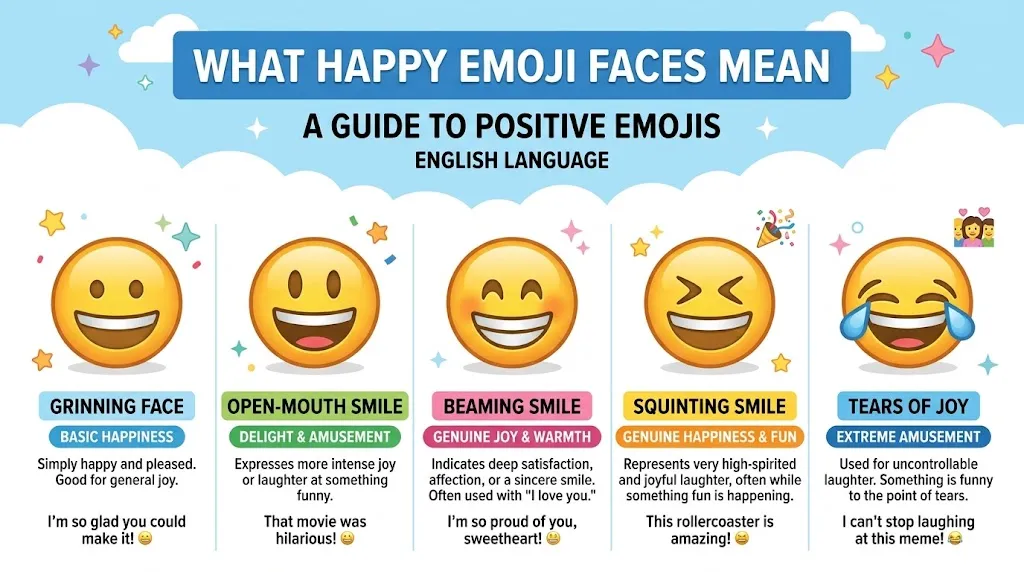
Emoji faces happy generally refers to smiling and cheerful face emojis used to communicate positive emotions. These emojis can express happiness, friendliness, joy, amusement, satisfaction, or excitement.
Some common examples include 😀, 😃, 😄, 😁, 😊, and 🙂.
The exact feeling depends on the face. For example:
- 😀 can show genuine happiness or excitement.
- 😃 can express cheerful enthusiasm.
- 😄 often shows strong happiness or laughter.
- 😁 can suggest a big grin or excitement.
- 😊 usually feels warm, sweet, and friendly.
- 🙂 can communicate a simple smile or calm positivity.
People often use happy emojis when words alone feel too serious or plain.
Example:
“I finally finished my work 😀”
Here, the emoji adds excitement and makes the message feel more positive.
Another example is:
“Thanks for helping me 😊”
The emoji makes the message sound warmer and more appreciative.
Different Meanings of Emoji Faces Happy
Happy emojis can have different meanings depending on the situation.
General Meaning
The general meaning is happiness, positivity, friendliness, or satisfaction.
“Good morning 😀”
This usually means the sender is starting the conversation with a cheerful mood.
Romantic Meaning
In romantic conversations, a happy face may show affection or excitement without being openly romantic.
“I really enjoyed talking to you 😊”
Here, 😊 can make the message feel soft and affectionate.
Friendly Meaning
Friends commonly use happy emojis to show support, excitement, or friendliness.
“You’re coming with us? 😄”
The emoji adds excitement to the invitation.
Funny Meaning
A smiling emoji can accompany a joke or playful comment.
“I totally didn’t eat the last slice 😁”
The emoji can make the playful lie obvious.
Sarcastic Meaning
Sometimes a happy emoji is used sarcastically.
“Great, another Monday 😀”
The words sound positive, but the context suggests the person is actually unhappy about Monday.
Social Media Meaning
On social media, happy emojis can make comments and captions appear more positive and engaging.
“This is amazing 😄”
They can also show approval without requiring a long comment.
Text Message Meaning
In texting, happy emojis often soften a message and make it sound friendlier.
“Sure, I can help 😊”
Without the emoji, the sentence may feel neutral. With it, the message feels warmer.
Workplace Meaning
Happy emojis can be useful in casual workplace conversations, especially with familiar coworkers.
“Thanks for sending that over! 😊”
However, it is usually better to avoid excessive emojis in formal business communication.
When Should You Use Emoji Faces Happy?
Happy emojis are useful whenever you want your message to feel positive, friendly, or relaxed.
You can use them in situations such as:
- Saying hello to a friend.
- Thanking someone.
- Celebrating good news.
- Showing excitement.
- Reacting to a funny message.
- Supporting someone.
- Making a casual message sound warmer.
- Responding positively to a social media post.
- Showing appreciation.
- Making a conversation feel less formal.
Texting Examples
“That sounds great 😀”
“Thank you so much 😊”
“We finally did it! 😄”
“See you tomorrow 😁”
“Good luck with your exam! 😊”
The key is to choose an emoji that matches the emotion you want to communicate.
What Does Emoji Faces Happy Mean From a Girl?
When a girl sends a happy emoji, it usually means she is keeping the conversation positive, friendly, or cheerful. The exact meaning depends heavily on the words surrounding the emoji.
For example:
“That was really fun 😊”
This can simply mean she enjoyed the experience.
If she sends:
“Can’t wait to see you 😄”
The emoji may emphasize excitement.
In a romantic conversation, 😊 may sometimes feel more affectionate than a simple 😀. However, you should not assume that a happy emoji automatically means romantic interest.
Look at the entire conversation, not just one emoji.
What Does Emoji Faces Happy Mean From a Boy?
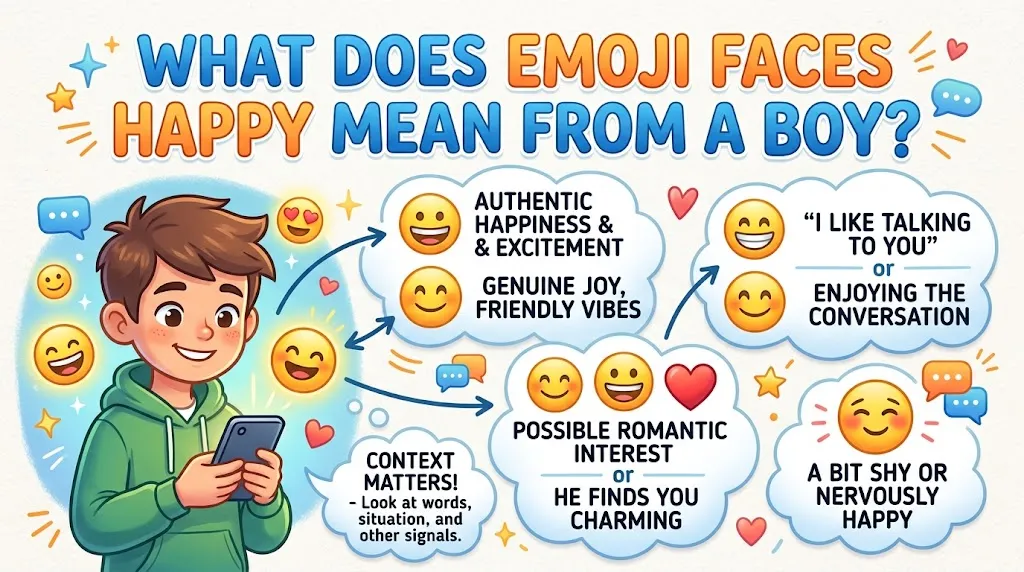
When a boy uses happy emojis, he may be showing friendliness, excitement, humor, or appreciation.
For example:
“You actually remembered! 😄”
This sounds genuinely happy and appreciative.
A message such as:
“See you later 😊”
may simply be friendly and warm.
In a romantic conversation, repeated smiling emojis can help make messages feel more relaxed and affectionate. Still, the surrounding words and overall communication style matter more than one emoji.
Emoji Faces Happy on Snapchat
On Snapchat, happy emojis are commonly used in chats, captions, and replies. They can make a quick message feel more expressive.
For example:
“That snap was hilarious 😂”
or:
“Nice picture 😄”
Snapchat conversations are usually casual, so happy emojis fit naturally.
Remember that Snapchat also has special emoji indicators connected with relationships and interactions. Those platform-specific symbols can have meanings that are different from ordinary smiling emojis.
Emoji Faces Happy on WhatsApp
WhatsApp emojis are frequently used to add emotion to everyday conversations.
A simple:
“Okay 😊”
can sound much friendlier than a plain “Okay.”
You can also combine emojis:
“Congratulations! 🎉😀”
or:
“Good night 😊❤️”
Happy emojis work particularly well in family chats, friend groups, and casual conversations.
Emoji Faces Happy on Instagram
Instagram emojis are popular in captions, comments, DMs, and Stories.
You might see:
“Love this photo 😍”
or:
“Such a beautiful day ☀️😊”
In comments, a single happy emoji can show support without requiring a full sentence.
Creators may also combine happy faces with hearts, stars, celebrations, or other symbols to make captions more expressive.
Emoji Faces Happy on TikTok
TikTok emojis are often used alongside humorous, exciting, or emotional content.
For example:
“This is too funny 😂”
or:
“I need to try this 😄🔥”
TikTok emojis can help communicate the viewer’s reaction quickly. Because TikTok content often moves quickly, a short emoji reaction can say a lot without a long comment.
Emoji Combinations
Emoji combinations can create a stronger message than a single emoji. Here are some popular examples:
| Emoji Combination | Meaning |
| 😀❤️ | Happy and affectionate |
| 😄🎉 | Excited and celebrating |
| 😊❤️ | Warm affection |
| 😁🔥 | Excited or impressed |
| 😀👍 | Happy approval |
| 😃👏 | Excitement and appreciation |
| 😊🌸 | Sweet and gentle happiness |
| 😄☀️ | Bright, positive mood |
| 😀✨ | Happiness and excitement |
| 😁🙌 | Celebration or excitement |
| 😊🥰 | Sweet affection |
| 😄💯 | Strong approval |
| 😀🎊 | Celebration |
| 😊🤗 | Warmth and friendliness |
| 😃😍 | Excitement or admiration |
The meaning of emoji combinations can change depending on the conversation.
Copy and Paste Emoji Faces Happy
Want to use happy emojis quickly? Copy and paste these popular options:
😀 Copy
😃 Copy
😄 Copy
😁 Copy
😊 Copy
🙂 Copy
😀😀 Copy
😄😄 Copy
😀❤️ Copy
😊❤️ Copy
😄🎉 Copy
😁🔥 Copy
😊🥰 Copy
😀✨ Copy
😃👏 Copy
These copy and paste emoji options are useful for texts, comments, captions, and DMs.
Similar Emojis
Many emojis look similar but communicate slightly different feelings.
| Emoji | Name | Meaning | Difference |
| 😀 | Grinning Face | Happiness | Simple, open happiness |
| 😃 | Grinning Face with Big Eyes | Cheerfulness | More energetic |
| 😄 | Grinning Face with Smiling Eyes | Joy | Warmer and more expressive |
| 😁 | Beaming Face | Big grin | Strong excitement or delight |
| 😆 | Grinning Squinting Face | Laughter | More playful |
| 😅 | Grinning Face with Sweat | Relief or nervousness | Happiness mixed with awkwardness |
| 😂 | Face with Tears of Joy | Strong laughter | Usually means something is very funny |
| 🤣 | Rolling on the Floor Laughing | Extreme laughter | Stronger than 😂 |
| 😊 | Smiling Face with Smiling Eyes | Warm happiness | Softer and sweeter |
| 🙂 | Slightly Smiling Face | Mild positivity | More subtle than 😀 |
| 😍 | Smiling Face with Heart-Eyes | Love or admiration | More romantic or excited |
| 🥰 | Smiling Face with Hearts | Affection | Strong warmth and affection |
Choosing the right emoji depends on the emotion you want to emphasize.
Emoji Appearance Across Platforms
Emoji designs can look slightly different across devices and apps. The basic meaning usually stays similar, but facial expressions, shapes, colors, and details may vary.
Apple
Apple emojis generally have a polished and detailed appearance. Smiling faces may have subtle differences in eyes and mouth compared with other platforms.
Android
Android devices can display emojis differently depending on the operating system and device manufacturer.
Samsung
Samsung has its own emoji designs, so a smiling face may look slightly different from the Apple version.
Windows
Windows emoji designs can have a distinct visual style. Users may notice differences when sending the same emoji between Windows and mobile devices.
Facebook may display emojis according to its own platform design and updates. The appearance can change over time.
WhatsApp displays emojis across many devices, and their exact appearance may depend on the operating system being used.
Even when the design changes, the basic emoji meaning generally remains recognizable.
Fun Facts
Here are eight interesting facts about happy emojis:
- 😀 is one of the most recognizable expressions in digital communication.
- Emojis can add emotional context to short messages.
- The same emoji can have different interpretations in different conversations.
- Emoji designs can vary between Apple, Android, Samsung, and Windows.
- Happy faces are frequently used to soften otherwise short replies.
- Combining emojis can create a more specific emotional message.
- 😊 often feels softer and warmer than a basic grinning face.
- Emoji meanings can change as online communication trends evolve.
Common Mistakes
One common mistake is assuming that every smiling emoji means exactly the same thing. 😀, 😄, 😊, and 🙂 may all look positive, but they can communicate different levels of emotion.
Another mistake is treating an emoji as proof of someone’s romantic feelings. A smiley from a girl or boy does not automatically mean flirting.
Context matters.
Using too many happy emojis can also make a serious message seem less serious. For example, adding 😀 to a message about bad news could confuse the reader.
Sarcasm is another important factor. Someone might write:
“Wonderful, my computer crashed again 😀”
The happy emoji does not mean the person is actually happy.
Always consider the words, relationship, situation, and tone before deciding on an emoji meaning.
FAQs:
What does emoji faces happy mean?
Emoji faces happy generally represent positive emotions such as happiness, friendliness, excitement, amusement, or satisfaction. The exact meaning depends on the specific emoji and the conversation. A simple 😀 can show happiness, while 😊 may communicate a softer, warmer feeling.
What is the most common happy face emoji?
😀 is one of the most recognizable happy face emojis. It usually communicates straightforward happiness, friendliness, or excitement. However, emojis such as 😄, 😊, and 😁 can also express happiness with slightly different emotional tones.
What does 😊 mean in a text?
😊 usually communicates warmth, friendliness, appreciation, or gentle happiness. It can make a message sound softer and more caring. In romantic conversations, it may sometimes feel affectionate, but it does not automatically indicate romantic interest.
What does 😀 mean from a girl?
😀 from a girl usually means she is expressing happiness, friendliness, excitement, or a positive reaction. Its meaning depends on the conversation. It should not automatically be interpreted as flirting because people use smiling emojis differently.
What does 😄 mean from a boy?
😄 from a boy commonly shows happiness, excitement, amusement, or friendliness. If the conversation is romantic, it can make the message feel warm and enthusiastic. However, the surrounding words provide more reliable context than the emoji alone.
Are happy emojis good for texting?
Yes, happy emojis can make casual texting feel warmer and more expressive. They are especially useful when you want to show friendliness, excitement, appreciation, or humor. In formal communication, however, it is usually better to use them carefully.
Can happy emojis be sarcastic?
Yes. Happy emojis can be used sarcastically when the words and emoji communicate opposite emotions. For example, “Another meeting at 7 AM 😀” may suggest that the person is actually unhappy about the early meeting.
Can I use happy emojis on Instagram and TikTok?
Absolutely. Instagram emojis and TikTok emojis are commonly used in comments, captions, DMs, and reactions. Happy faces can make posts feel more positive and help communicate emotions quickly without writing a long response.
Conclusion
Emoji faces happy are a simple way to add emotion, warmth, and personality to digital conversations. From 😀 and 😄 to 😊 and 😁, each smiling face can communicate a slightly different feeling.
The most important thing is context. A happy emoji can mean genuine excitement, friendly support, affection, humor, or even sarcasm depending on the situation.
If you are sending WhatsApp emojis, commenting on Instagram, reacting on TikTok, or chatting with a friend, choose the emoji that best matches your intended mood.
When you understand these small differences, your messages become clearer, more natural, and much more expressive.

I am Caleb Morgan, a passionate writer and digital growth enthusiast at AuthoritySprout.com. I share practical insights about SEO, website authority, organic traffic, content strategy, and online growth to help websites build a stronger presence and achieve long-term success.